
Choosing school clothing
The child will attend an educational institution in school clothing throughout the academic year. When purchasing, pay attention to the following points. 1) Carefully study the labeling - the tag with the manufacturer's data and fabric composition. The clothing label must contain the following information: • The name of the country where the product is made • The name and location of the manufacturer (the authorized representative of the manufacturer), importer, seller • The name of the product • The date of manufacture (month, year) • The mass fraction (percentage content) of natural and chemical raw materials in the upper material and lining of the product • The size of the product • A unified mark for market circulation The product labeling must be in Russian. For imported products, the name of the country where the product is made, the name of the manufacturer, and its legal address may be indicated using the Latin alphabet. 2) Pay attention to the symbols that indicate how the product should be cared for. 3) The product should not emit a sharp odor. The presence of an unpleasant smell may indicate the presence of harmful or even dangerous chemicals used in dyeing the fabric in the textile materials. 4) The presence of documents confirming compliance. The seller is obliged to present these documents to the buyer upon first request. When purchasing clothing for school, choose the right size, and ensure that your child is comfortable in it both when sitting and walking. The item should not excessively restrict the child's movements or be too tight, as a tight skirt or pants can lead to stomach pain, and tight shirts and sundresses can even disrupt breathing. Choose several items of school clothing for your child at once, so they can be easily changed throughout the week. In addition, starting from 09.03.2025, the National Standard GOST R 71582-2024 "Clothing for Students (School Uniform). General Technical Requirements" (for voluntary implementation) will come into effect. This standard applies to clothing for students in educational programs of primary general, basic general, and secondary general education - school uniforms made from fabrics and knitted materials. This standard does not apply to footwear and sportswear. The terms used in this standard are based on GOST 17037, as well as the following terms with corresponding definitions: Student clothing (school uniform) - a uniform assortment of clothing in style, design solutions, and color combinations intended for students (in educational programs of primary general, basic general, and secondary general education) in general educational organizations, including second and third layer products. Business style - a style of clothing intended for the business sphere of society, characterized by strictness, restraint, and conservatism in the choice of materials, colors, cuts, and accessories. Depending on the purpose, school uniforms are divided into: • everyday; • formal. School uniforms are made as individual items or sets (combinations) of two or more items, as well as with accessories that are integral parts of the product. We wish you a good choice of school clothing! RECOMMENDATIONS FOR CHOOSING SCHOOL UNIFORMS The start of the new school year is just around the corner, and parents face the question of choosing school uniforms for their children. One of the main requirements for school clothing is its comfort. It should not restrict the child's movements, must fit properly, be comfortable to wear (not stiff, not prickly, and should absorb moisture well), and be suitable for the season. It is better to choose clothing for schoolchildren made from natural materials. Such clothing is comfortable, easy to care for, and lightweight. Materials such as cotton, linen, wool, half-wool, and viscose are used for school uniforms, which have good breathability and hygroscopicity (the ability to absorb moisture). Synthetic materials, as a rule, accumulate static electricity, have low breathability and hygroscopicity, can cause increased sweating, and consequently lead to rashes and skin irritation. The product should not emit a sharp chemical smell (indirectly, it may indicate the presence of harmful or dangerous chemical compounds in the fabric). The requirements for school uniforms are outlined in the Technical Regulation of the Customs Union "On the Safety of Products Intended for Children and Adolescents" (TR TS 007/2011). By functional purpose, clothing is divided into first, second, and third layer products. Each layer of clothing has its own hygiene requirements. Clothing and first layer products - items that have direct contact with the user's skin, such as underwear, hosiery. Clothing and second layer products - items that have limited contact with the user's skin, including dresses, blouses, outer shirts, trousers, skirts, unlined suits, sweaters, and jumpers. Third layer clothing - coats, half-coats, jackets, raincoats, lined suits. When purchasing children's clothing (school uniforms), it is necessary to pay attention to the availability of documents confirming quality and safety: • certificate of conformity for first layer knitted products made from textile materials, and second layer clothing and products made from textile materials and knitted; • declaration of conformity for third layer clothing and products made from knitted and textile materials. All products must have labeling applied to the product, a label attached to the product or a product tag, the product's packaging, the packaging of a group of products, or an insert sheet for the product. The product labeling must be reliable, verifiable, readable, accessible for inspection and identification, and contain the following information: • the name of the country where the product is made; • the name and location of the manufacturer, importer, distributor; • the name and type (purpose) of the product; • the date of manufacture; • a unified mark for market circulation; • the service life of the product (if necessary); • warranty period (if necessary); • trademark (if available). The labeling of clothing, textile products, knitted products, and finished textile items, in addition to mandatory requirements, must include information indicating: • the type and mass fraction (percentage content) of natural and chemical raw materials in the upper material and lining of the product (deviations of actual values of the percentage content of raw materials must not exceed 5 percent); • the size of the product according to the standard size scale or the requirements of the regulatory document for a specific type of product; • care symbols for the product and/or instructions on the specifics of caring for the product during operation (if necessary). The information must be presented in Russian. Products for children and adolescents that meet the safety requirements of the technical regulation and have undergone the compliance assessment procedure must have labeling with a unified mark for market circulation in the member states of the Customs Union. We wish you pleasant and quality purchases! Zelenodolsk branch of the Center for Hygiene and Epidemiology in the Republic of Tatarstan
Другие Новости Казани (Казань716)
 Floods and power outages – in Tatarstan, the aftermath of the downpour is being addressed.
In several districts of Tatarstan, the consequences of the recent storm - heavy rain and strong winds - are being addressed. 10.08.2026. Newspaper Vesti KAMAZ. Republic of Tatarstan. Naberezhnye Chelny.
Overeating: 4 mistakes people make the next day
Overeating happens to everyone — at the holiday table or on a stressful evening. 10.08.2026. Zainsk-Inform. Republic of Tatarstan. Zainsk.
Mourning has been declared in Tatarstan.
In Tatarstan, mourning has been declared for those who died in Nizhnekamsk as a result of an enemy drone attack. 10.08.2026. Aktanysh District. Republic of Tatarstan. Aktanysh.
"Ъ": Wildberries has disabled fines for transferring goods to another sorting center after the evacuation of the warehouse in Nizhnekamsk.
In Nizhnekamsk, a sorting center of Wildberries was evacuated in the morning. Against the backdrop of the incident, the company suspended penalties for shipping goods to another sorting center. 10.08.2026. Business Online. Republic of Tatarstan. Kazan.
Floods and power outages – in Tatarstan, the aftermath of the downpour is being addressed.
In several districts of Tatarstan, the consequences of the recent storm - heavy rain and strong winds - are being addressed. 10.08.2026. Newspaper Vesti KAMAZ. Republic of Tatarstan. Naberezhnye Chelny.
Overeating: 4 mistakes people make the next day
Overeating happens to everyone — at the holiday table or on a stressful evening. 10.08.2026. Zainsk-Inform. Republic of Tatarstan. Zainsk.
Mourning has been declared in Tatarstan.
In Tatarstan, mourning has been declared for those who died in Nizhnekamsk as a result of an enemy drone attack. 10.08.2026. Aktanysh District. Republic of Tatarstan. Aktanysh.
"Ъ": Wildberries has disabled fines for transferring goods to another sorting center after the evacuation of the warehouse in Nizhnekamsk.
In Nizhnekamsk, a sorting center of Wildberries was evacuated in the morning. Against the backdrop of the incident, the company suspended penalties for shipping goods to another sorting center. 10.08.2026. Business Online. Republic of Tatarstan. Kazan.
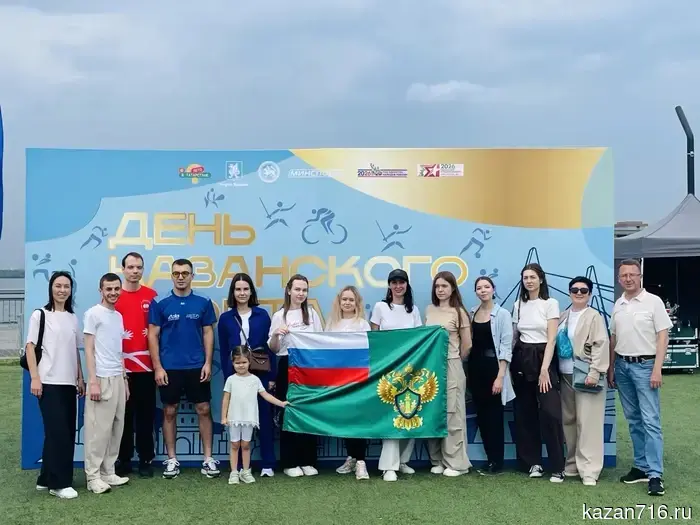 The Day of Physical Culture - a celebration of energy and strength was marked by the employees of the Volga-Kama Interregional Office of Rosprirodnadzor.
Members of the Youth Council of the Volga-Kama Interregional Office of Rosprirodnadzor did not stay on the sidelines and vividly celebrated the All-Russian Physical Culture Day! 10.08.2026. Rosprirodnadzor. Republic of Tatarstan. Kazan.
Replacement of driver's licenses: who is required to undergo the procedure in 2026 in Tatarstan
This year, the automatic extension of the driver's license validity period has ceased. 10.08.2026. Kaibitskie Zori. Republic of Tatarstan. Bolshie Kaibitsy.
The Day of Physical Culture - a celebration of energy and strength was marked by the employees of the Volga-Kama Interregional Office of Rosprirodnadzor.
Members of the Youth Council of the Volga-Kama Interregional Office of Rosprirodnadzor did not stay on the sidelines and vividly celebrated the All-Russian Physical Culture Day! 10.08.2026. Rosprirodnadzor. Republic of Tatarstan. Kazan.
Replacement of driver's licenses: who is required to undergo the procedure in 2026 in Tatarstan
This year, the automatic extension of the driver's license validity period has ceased. 10.08.2026. Kaibitskie Zori. Republic of Tatarstan. Bolshie Kaibitsy.
Choosing school clothing
Throughout the school year, the child will attend the educational institution in school uniform. 10.08.2026. Kaibitsky Zori. Republic of Tatarstan. Bolshie Kaibitsy.