

SECTION "CONVERSATION WITH AN EXPERT" 20.08.2026
SECTION "CONVERSATION WITH AN EXPERT"
Today, epidemiologist Marina Viktorovna Kuznetsova from the AIDS Center spoke about the prevention of HIV infection among contacts.
What you need to know about HIV testing.
HIV is a serious disease, but it can be kept under control. The main thing is to find out about the infection in time. A person with HIV remains a source of infection for life. The most dangerous time is the first weeks after infection, when the infected person is still unaware of their infection, but the virus in their blood is already very active.
That is why early diagnosis is so important. It helps to find the virus through special "markers" in the blood: pieces of genes, virus particles, or antibodies produced by the body. These markers appear as early as the first week after infection, with their peak occurring at the end of the hidden period—before the body starts actively fighting.
At the very beginning of the disease, a person may feel completely healthy. There are no symptoms. Therefore, if you have had casual sexual encounters without a condom or have used drugs, do not wait for signals from your body. Get tested, even if you feel fine.
Many think: "I lead a healthy lifestyle; this won't happen to me." But it is precisely because people do not know their status that the virus continues to spread. Ignorance is not protection.
How does the testing process work?
The most reliable method is a blood test for antibodies to HIV and for a virus particle (p24 antigen). If these "markers" are found, it means there is an infection.
But there is an important nuance. If the infection occurred recently, the test may show "negative" even in the presence of the virus. This period is called the "seronegative window." It can last up to six months, and in rare cases, up to one year. Thus, a negative result immediately after contact is not a guarantee that you are healthy.
What do specialists do when they find an HIV-infected person?
They conduct an investigation to:
- understand from whom the person was infected;
- stop further transmission of the virus;
- identify everyone who had sexual contact with the HIV-infected person and their family members and test them;
- if any contacts are found to be infected, place them under medical supervision;
- explain to the HIV-infected person and their surroundings how to behave safely (for example, always use condoms) to avoid infecting others.
•
When and how often should you get tested if you have been in contact?
The first time—immediately after learning about the contact. Then—after 3 months, after 6 months, and after one year following the last risky contact.
If you continue to communicate with an HIV-positive person, and they have a low viral load (the medication is working well)—the risk of infection is reduced but not zero. Still, use condoms and get tested once a year.
Where can you get tested for free and anonymously?
In Tatarstan, the Republican Center for the Prevention and Control of AIDS operates. There you can get tested for free, and no one will know your name if you do not want them to. This also applies to those who have been in contact with an infected person—testing is free for you as well.
More news about the event:
Infectious disease doctor from Zainsk Central District Hospital explained how to protect against HIV infection
Infectious disease doctor Anvar Nabiullin from the State Autonomous Healthcare Institution "Zainsk Central District Hospital" spoke about modern approaches to HIV infection prevention, the importance of regular testing, and the possibilities of antiretroviral therapy. 16:48 20.08.2026 Ministry of Health of the Republic of Tatarstan - Kazan
SECTION "CONVERSATION WITH AN EXPERT" 20.08.2026
SECTION "CONVERSATION WITH AN EXPERT"
Today, epidemiologist Marina Viktorovna Kuznetsova from the AIDS Center spoke about the prevention of HIV infection among contacts. 15:02 20.08.2026 AIDS Center - Kazan
News from neighboring regions on the topic:
What symptoms might lead a person to suspect they have HIV
Human Immunodeficiency Virus (HIV) is a virus that affects the human immune system. 17:55 20.08.2026 Rospotrebnadzor - Magas
"Stay informed about your health!"
On August 25, 2026, at the central city library (Taiga, 40 years of October Street, 10:01 20.08.2026 Centralized Library System of the Taiga Urban District - Taiga
Is there a connection between the time of year and the risk of HIV infection?
HIV infection is a chronic infectious disease caused by the human immunodeficiency virus. 16:17 19.08.2026 Rospotrebnadzor - Grozny
AIDS Center events
As part of the World Patient Safety Day, which will be celebrated on September 17, the State Autonomous Healthcare Institution "Center for the Prevention and Control of AIDS and Infectious Diseases" has planned various events. 15:39 19.08.2026 State Autonomous Healthcare Institution Center for the Prevention and Control of AIDS and Infectious Diseases - Ivanovo
Is there a connection between the time of year and the risk of HIV infection?
Is there a connection between the time of year and the risk of HIV infection? No, the season itself does not increase or decrease the risk of HIV infection. 17:05 18.08.2026 Rospotrebnadzor - Chelyabinsk
Residents of Buryatia were informed about the dangers of HIV infection in summer
Photo: Tatyana Nikitina
Rospotrebnadzor specialists in Buryatia reminded that HIV infection is a long-term infection that develops as a result of infection with the human immunodeficiency virus (HIV). 20:56 18.08.2026 Newspaper Novaya Buryatia - Ulan-Ude
Is there a connection between the time of year and the risk of HIV infection?
Is there a connection between the time of year and the risk of HIV infection?
HIV is an infection—a chronic infectious disease that affects the human immune system. 14:50 18.08.2026 Rospotrebnadzor - Samara
5 facts about HIV that every young person should know
HIV (human immunodeficiency virus) is a disease surrounded by many myths that generate unfounded fears and stigmatization. 15:36 18.08.2026 Rospotrebnadzor - Cherkessk
Is there a connection between the time of year and the risk of HIV infection?
HIV infection is a chronic infectious disease caused by the human immunodeficiency virus. 12:23 18.08.2026 Rospotrebnadzor - Kaluga

Другие Новости Казани (Казань716)
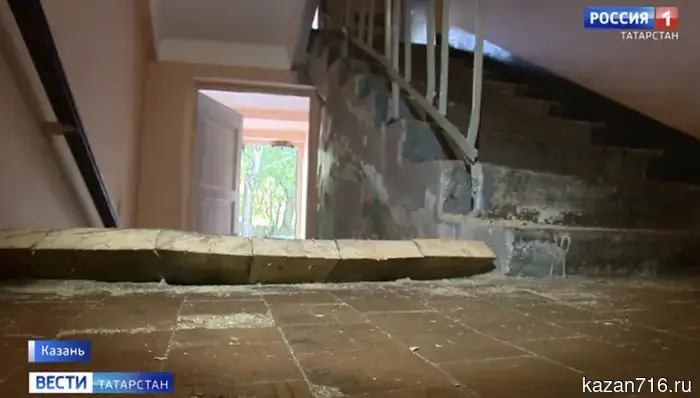 A staircase collapsed in a residential building in Kazan: the prosecutor's office has begun an investigation following a woman's injury.
The Prosecutor's Office of Kazan is conducting an inspection today following the collapse of a stairwell in one of the apartment buildings on Yutazinskaya. 20.08.2026. GTRK Tatarstan. Republic of Tatarstan. Kazan.
A staircase collapsed in a residential building in Kazan: the prosecutor's office has launched an investigation following a woman's injury.
The Prosecutor's Office of Kazan is conducting an investigation today following the collapse of a staircase in one of the apartment buildings on Yutazinskaya. 20.08.2026. GTRK Tatarstan. Republic of Tatarstan. Kazan.
Kazan residents consider a worthy pension to be 55,500 rubles.
According to the residents of Kazan, a decent pension should amount to 55,500 rubles per month, according to a study by SuperJob. 01.09.2026. IA Tatar-inform. Republic of Tatarstan. Kazan.
In the Republic of Tatarstan, investigators are establishing the circumstances of a woman's injury due to the collapse of a staircase in the entrance of a residential building.
It was reported on the air of one of the federal TV channels about the collapse of a staircase opening in the entrance of a multi-apartment residential building in the city of Kazan. 20.08.2026. Investigative Committee. Republic of Tatarstan. Kazan.
A staircase collapsed in a residential building in Kazan: the prosecutor's office has begun an investigation following a woman's injury.
The Prosecutor's Office of Kazan is conducting an inspection today following the collapse of a stairwell in one of the apartment buildings on Yutazinskaya. 20.08.2026. GTRK Tatarstan. Republic of Tatarstan. Kazan.
A staircase collapsed in a residential building in Kazan: the prosecutor's office has launched an investigation following a woman's injury.
The Prosecutor's Office of Kazan is conducting an investigation today following the collapse of a staircase in one of the apartment buildings on Yutazinskaya. 20.08.2026. GTRK Tatarstan. Republic of Tatarstan. Kazan.
Kazan residents consider a worthy pension to be 55,500 rubles.
According to the residents of Kazan, a decent pension should amount to 55,500 rubles per month, according to a study by SuperJob. 01.09.2026. IA Tatar-inform. Republic of Tatarstan. Kazan.
In the Republic of Tatarstan, investigators are establishing the circumstances of a woman's injury due to the collapse of a staircase in the entrance of a residential building.
It was reported on the air of one of the federal TV channels about the collapse of a staircase opening in the entrance of a multi-apartment residential building in the city of Kazan. 20.08.2026. Investigative Committee. Republic of Tatarstan. Kazan.
SECTION "CONVERSATION WITH AN EXPERT" 20.08.2026
SECTION "CONVERSATION WITH AN EXPERT" Today, epidemiologist Marina Viktorovna Kuznetsova from the AIDS Center spoke about the prevention of HIV infection among contacts. 20.08.2026. AIDS Center. Republic of Tatarstan. Kazan.