
Increase in pensions, restriction of installments, and new credit rules: a guide to the laws of April
Interest-free installments in Russia can be taken for a maximum of six months
New rules for consumer installments
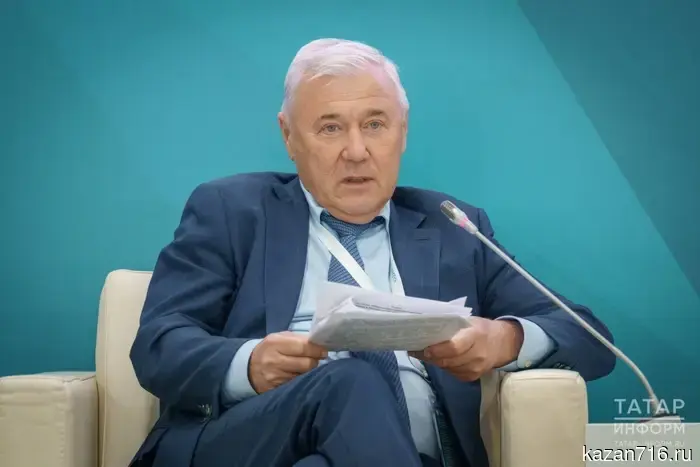
Starting April 1, unified requirements and control from the Bank of Russia will be introduced for installment services. A federal law will come into effect, under which installment services will no longer be able to increase the cost of goods when paid in installments. The terms of interest-free installments will be shortened: starting April 1, it can be arranged for a maximum of six months, and from April 1, 2028 – for four months. “The new rules for providing installments, which come into effect on April 1, are aimed at enhancing consumer rights protection. Now this market will become more regulated and safer for citizens,” said Anatoly Aksakov, Chairman of the State Duma Committee on the Financial Market, to Tatar-inform. Buyers will be given the opportunity to repay installments without penalties. The maximum amount of late payment fines will be limited to 20% per annum of the overdue debt amount. “Previously, these issues were not regulated at all, and buyers faced significant markups, various commission payments, hidden terms, and huge fines when purchasing goods in installments, with additional money being charged even for early repayment of debt. This will no longer be the case,” Aksakov explained. The activities of installment operators will come under the control of the Bank of Russia, which increases the protection of buyers, the deputy added. When arranging a large installment of more than 50,000 rubles, data will be sent to credit history bureaus. “This will allow monitoring the growth of debt burden on citizens and will not affect the credit history for small purchases,” Aksakov concluded.
Increase in social pensions
Starting April 1, social pensions in Russia will be indexed by 6.8% – according to the official inflation rate in 2025. The recalculation will occur automatically, and recipients do not need to apply anywhere for this. “4.3 million social pension recipients will receive an increased social pension starting April 1 – it will increase by 6.8%,” confirmed State Duma deputy Svetlana Bessarab to Tatar-inform. Social pensions in Russia are paid for: old age, disability, loss of breadwinner, to orphans under 18 years old or students in full-time education who are orphans up to 23 years old. This is a monthly cash payment from the federal budget. “The old-age social pension is paid five years later than the insurance old-age pension. This is usually related to the fact that the citizen either did not work or could not accumulate the required level of insurance experience – 15 years, or did not accumulate the required individual pension coefficients (IPC) – currently, 30 IPC are required. In this case, a social pension is assigned,” Bessarab added. For example, starting April 1, the average size of the social pension will increase by more than a thousand rubles and will amount to 16,500 rubles. The average size of the social pension for disabled children will increase by 1,600 rubles, to 24,500 rubles. For first-group disabled individuals from childhood, the monthly pension will increase by 1,600 rubles and will amount to 25,400 rubles. The actual amount of the increase for each recipient will depend on the individual size of the pension.
Pensions for participants of the Great Patriotic War and those awarded the "Resident of Blockaded Leningrad," "Resident of Besieged Sevastopol," and "Resident of Besieged Stalingrad" will also be indexed in Russia. The increase applies to military personnel who served on conscription; citizens exposed to radiation; test pilots.
New rules for issuing loans and microloans
Starting April 1, banks will use only official data from the Federal Tax Service and the Social Fund, obtained through the "Digital Profile" system, when calculating the debt burden indicator (DBI). Previously, credit organizations could use any information about earnings: bank form certificates, account statements, and even verbal statements from the client. Now borrowers with unofficial income may be denied a loan or offered a significantly lower amount than requested. If a Russian citizen works officially but the employer pays tax not on the full amount, this may be grounds for denying the loan. Banks will only see the amount on which taxes and contributions were paid. The innovation applies not only to new loans but also to refinancing and increasing credit card limits.
Two more changes: the maximum overpayment on loans for up to one year will be reduced from 130% to 100% per annum, and companies and individual entrepreneurs will be able to take microloans of up to 15 million rubles (previously it was 5 million rubles).
Stricter cash export rules
Starting April 1, individuals will be prohibited from exporting cash in rubles from Russia to the member states of the Eurasian Economic Union (EAEU) in amounts exceeding the equivalent of $100,000 at the Central Bank's exchange rate on the date of export. This ban will apply to legal entities and individual entrepreneurs regardless of the amount. The law does not apply to credit organizations.
The EAEU includes Russia, Armenia, Belarus, Kazakhstan, and Kyrgyzstan.
An exception will be made for exporting funds abroad through airports designated by the government. Certified bank statements confirming the withdrawal of money from the accounts of those exporting it, or "other documents, the list of which is established by the Government," will be required.
The change, as stated in the decree signed by President of the Russian Federation Vladimir Putin, was introduced "to protect national security and national interests of the Russian Federation, ensuring its financial stability."
New grounds for blocking sales in the "Honest Sign" system
Starting April 1, new rules will come into effect in the "Honest Sign" system for the sale of perfumes and colognes, beer and beverages based on it, shoes, packaged water, and tires. At the checkout, when scanning the QR code, it will be checked whether there are valid permitting documents for the products.
If the certificate or declaration of conformity is absent, expired, canceled, or deemed invalid, the product cannot be added to the receipt. The sale will be automatically blocked. The innovation applies to goods introduced into circulation from September 1, 2025.
Tax relief for the food service industry
Starting April 1, owners of catering establishments operating under a simplified or patent taxation system will be temporarily exempt from paying VAT. The benefit will be valid until the end of this year and will apply to those entrepreneurs who became VAT payers only this year.
Previously, entrepreneurs were exempt from tax if they met two conditions: the average salary of employees had to be no lower than the regional average, and revenue from catering had to be at least 70% of total income. These requirements have been canceled until the end of the year.
“Exempting the food service industry from VAT until the end of the year is a measure that directly improves the liquidity of the sector. In the food service industry, revenue quickly goes into purchases, rent, and salaries, so VAT affects not profit but working capital. Its cancellation reduces cash gaps and allows businesses to operate without pressure on current payments. As a result, enterprises can maintain prices, fulfill obligations to suppliers, and not reduce staff,” commented Olga Panina, head of the Committee on Economics and Finance of the Association of Small and Medium Enterprises of Tatarstan, to Tatar-inform.
Photo: © "Tatar-inform"
Другие Новости Казани (Казань716)
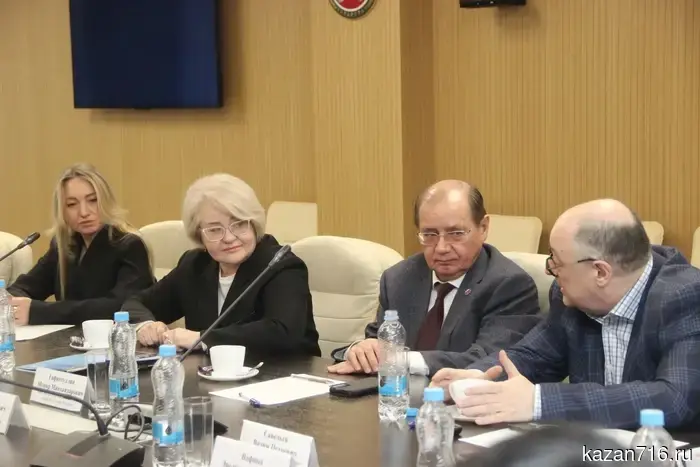 The Public Council under the Rosreestr of the Republic of Tatarstan discussed innovations in the field of land control.
March 31, 2026
The head of the legal department of the Federation of Trade Unions of the Republic of Tatarstan, Farida Sanatullina, participated in a meeting of the Public Council of the Federal Service for State Registration, Cadastre and Cartography of the Republic of Tatarstan. March 31, 2026. Federation of Trade Unions of RT. Republic of Tatarstan. Kazan.
The number of entrepreneurs in Tatarstan in the "Honest Sign" has increased by 40%.
In the Republic of Tatarstan, the number of SMEs connected to the "Honest Sign" system has increased by almost 40%. 31.03.2026. Zainsk-inform. Republic of Tatarstan. Zainsk.
Russia risks facing an outflow of IT specialists.
Photo: Tula Press
March 31 – IA SM.News. 31.03.2026. Kazan.Sm.News. Republic of Tatarstan. Kazan.
Delivery robots have appeared in two more districts of Kazan.
Today, Yandex delivery robots started operating in the Novosavinovsky and Soviet districts of Kazan. 31.03.2026. Ministry of IT and Communications. Republic of Tatarstan. Kazan.
The Public Council under the Rosreestr of the Republic of Tatarstan discussed innovations in the field of land control.
March 31, 2026
The head of the legal department of the Federation of Trade Unions of the Republic of Tatarstan, Farida Sanatullina, participated in a meeting of the Public Council of the Federal Service for State Registration, Cadastre and Cartography of the Republic of Tatarstan. March 31, 2026. Federation of Trade Unions of RT. Republic of Tatarstan. Kazan.
The number of entrepreneurs in Tatarstan in the "Honest Sign" has increased by 40%.
In the Republic of Tatarstan, the number of SMEs connected to the "Honest Sign" system has increased by almost 40%. 31.03.2026. Zainsk-inform. Republic of Tatarstan. Zainsk.
Russia risks facing an outflow of IT specialists.
Photo: Tula Press
March 31 – IA SM.News. 31.03.2026. Kazan.Sm.News. Republic of Tatarstan. Kazan.
Delivery robots have appeared in two more districts of Kazan.
Today, Yandex delivery robots started operating in the Novosavinovsky and Soviet districts of Kazan. 31.03.2026. Ministry of IT and Communications. Republic of Tatarstan. Kazan.
Increase in pensions, restriction of installments, and new credit rules: a guide to the laws of April
Interest-free installments in Russia can be taken for a maximum of six months New rules for consumer installments Starting from April 1, unified requirements and control by the Bank of Russia will be introduced for installment services. 31.03.2026. IA Tatar-inform. Republic of Tatarstan. Kazan.