
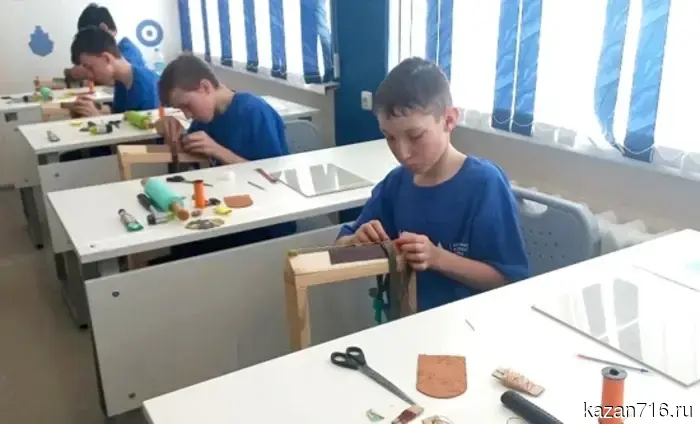
Pottery workshop, multi-therapy, and "Kazan stitch"
In every children's rehabilitation center for children and adolescents with disabilities, under the jurisdiction of the Ministry of Labor, Employment, and Social Protection of the Republic of Tatarstan, there is a standard set of services that children with health problems can receive. However, the staff of these institutions, in order to make the rehabilitation process more fulfilling, as well as interesting and attractive for the children, apply many social technologies.
In the Bugulminsky rehabilitation center for children and adolescents with disabilities "Revival," the technology of "multitherapy" is successfully practiced. It involves all children, except for very young ones – at least 20 children in each session. A team of three specialists works with them: two social educators – Irina Vdovina and Nadezhda Bashkirova, and a psychologist Irina Koshel. For this purpose, the institution has equipped a creative studio "Muse," which has all the necessary equipment, including special computer programs. All of this is a gift from local benefactors. "At first, we made ordinary cartoons – drawn and plasticine ones, created with the help of drawing on sand, from Lego, and characters cut out from magazines, then we started to work on psychotherapeutic ones," says Irina Vdovina. "We often receive difficult children – conflictual and aggressive or, on the contrary, apathetic, with low self-esteem and increased anxiety. Therefore, we focus on useful plots. With the help of such cartoons, we unobtrusively explain to the children that, for example, it is not okay to fight, lie, or hurt younger ones. At first, we took ready-made plots and adapted them to our conditions, and then we started to come up with our own. We try to ensure that every child can express themselves in all roles."
First, they discuss the scripts together, and often the children actively suggest what is especially close to them. Sometimes this becomes the basis for individual classes, during which the children create their own cartoons. For example, 14-year-old Stepa, who has cerebral palsy, managed to do this. The boy studies at an ordinary school, where he was bullied and not accepted by his peers. He decided to create a cartoon on the theme "We are different" to show his classmates his story. The character images were selected from the internet together with the studio leaders. Stepa himself became a fish in this film, while his peers became sharks. Then, according to the plot, he got an imaginary friend who began to protect him and helped him make friends with other children. "During the work, I held conversations with Stepa, conducted training sessions, psychological games, and we discussed how to properly get out of conflict situations," says Irina Koshel. "He really liked that in such an allegorical form, he could convey his feelings to those around him." After the rehabilitation course ended, Stepa showed this cartoon to his classmates. The comprehensive classes were not in vain: the boy became more confident, learned to interact correctly with his peers, and ultimately managed to normalize the situation at school.
5-year-old Vasya speaks poorly and initially did not react to anything at all. Irina Koshel also worked thoroughly with him – teaching him to pronounce words and phrases in different interpretations, depending on the situation, practicing in front of a mirror. The psychotherapeutic cartoons helped – the boy became an active participant in the process. His signature roles are various little animals, which he voices better and better.
– We make each group cartoon throughout the entire session, – says Irina Vdovina. – At the end, we definitely gather everyone and show it, discuss, and vote on who performed best, what needs to be improved next time. For parents, we post the finished works on Vkontakte; they are very proud of how their children transform. Our students often tell us: mom didn’t even realize it was me voicing! This greatly boosts their self-esteem and motivates them for further rehabilitation activities.
According to the center's director, Elena Starostina, there are positive changes in every child: cognitive and communication skills develop, children learn to improvise, fantasize, calm down, and, of course, derive great joy from the creative process. Moreover, such activities also involve students with autism, trying to use their preferences and strengths. Thus, the center's staff noticed that 11-year-old Roma loves to mold with plasticine, while 8-year-old Adel enjoys building with Lego. As a result, during the session, they created almost all the characters for the cartoons. Gradually, they became involved in group work and interacted much better with those around them.
In the Bavlinsky rehabilitation center for children and adolescents with disabilities "Shatlyk," a pottery workshop was equipped with funds from benefactors, and they are now successfully practicing clay therapy. "We were provided with everything necessary – a potter's wheel, consumables, various molds, two muffle furnaces, exhibition stands," says department head Elvira Farakhova. "In each session, we involve at least five children. To pay attention to each student, we focus on individual and small group classes of 3-4 children." In addition to making dishes on the potter's wheel under the guidance of staff, the students also create various souvenirs: whistles, toys for interior decoration. Thanks to sponsorship funds, the teacher of the "Art Studio," Irina Leontyeva, underwent training at the "Craft Workshop" in the district center and then conducted training workshops with other staff members. The parents of the students are also involved – according to the center's director, Zulfiya Ganeeva, practice shows that they always respond actively; they are interested in distracting themselves from the burdens of everyday life and creating something beautiful and useful together with their children. This helps to establish child-parent relationships, and adults begin to take pride in their offspring. Meanwhile, the students develop fine motor skills, relieve psychological blocks, and boost their self-esteem. For some, working with clay may even become a source of income in the future. For example, 17-year-old Almaz became so fond of making such crafts that he plans to start selling them through social networks. The young man with mental disabilities enrolled in the Aznakayevo College for plasterers and painters while also learning the profession of a cook there.
16-year-old Danila has muscular atrophy. At first, he could not grasp and hold small objects at all, was shy, insecure, poorly self-served, and was afraid of unfamiliar people. Thanks to the targeted work of the entire center staff, last year he took second place in the republican stage of "Abilympics" in the "Pottery" competency! His hands are already moving better, he fully serves himself, has become very active, and plans to enroll in an art school.
In the Arsky rehabilitation center for children and adolescents with disabilities "Source of Hope," technologies aimed at reviving folk crafts are being implemented: carpet weaving, crocheting and knitting, leather embroidery, and "Kazan seam." "We have equipped a labor therapy room," says director Gulzina Shaikhelislamova. "There is an embroidery frame, embroidery and sewing machines. During the session, we cover all older students – about two-thirds of all students." They conduct these classes every other day under the guidance of labor instructor Gulnara Salikhzyanova. The institution is confident that new skills will undoubtedly help children with disabilities become successful, self-sufficient individuals, reveal and develop their abilities, and for some, find a future profession. Take, for example, 16-year-old Ismagil M.: at first, the teenager with mental disabilities stuttered severely, was shy, and avoided strangers. But the labor instructor found an approach: the boy became interested in crocheting and is now creating very beautiful pillows. He easily picks up small details, recognizes colors, counts better, speaks better, and communicates with much more pleasure. He has already learned to embroider on a machine, makes original phone cases, and souvenir tubeteikas. This year, he participated in "Abilympics" in the "Carpet Weaving" competency. 16-year-old Amir Islamov is totally blind. He now knits excellently with needles. Under the guidance of Gulnara Salikhzyanova, he learned to calculate stitches, recognizes various patterns by touch, and his memory has improved; he has become much more open and sociable. Last year, he took third place in the republican stage of "Abilympics."
Another ward of the center, 10-year-old Danila Zubarev, has cerebral palsy. At first, it was very difficult for him to navigate space, hindered by severe spasticity of the hands. They started with ordinary stitches using thread and needle, and then he learned to handle an electric sewing machine. The boy can now position his body more easily, holds a pencil and scissors independently, and well identifies the center and right and left corners of the products. The pillows and headrests he makes are becoming more even and beautiful, and he has become more confident, taking better care of himself.
"The colorful scraps are donated to us by local ateliers and furniture stores," says the labor instructor. "I use individual or small group forms of work with the students. The results are visible: our wards develop fine motor skills, the classes help them relieve muscle spasticity, and boost their self-esteem. Such knowledge and skills will undoubtedly be useful to them in adult life – they will be able to repair their clothes, sew on buttons that have come off." The event plan includes trips to local history museums, ateliers, conducting master classes with local craftsmen, and celebrations with national
Другие Новости Казани (Казань716)
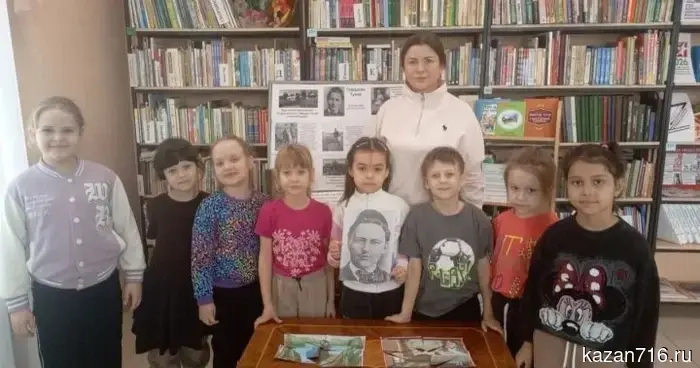 In Zainsk, preschoolers got acquainted with the works of Gabdulla Tukay.
On May 14, a literary hour dedicated to the life and work of the outstanding poet Gabdulla Tukay took place at the Ryabinka kindergarten in Zainsk.
The event was conducted by the librarian of branch No. 7, Elvira Arkhipova. 15.05.2026. Zainsk News. Republic of Tatarstan. Zainsk.
Reporter Rudenko: The Armed Forces of Ukraine used drones in the area of the Zaporizhzhia Nuclear Power Plant.
Photo: Official website of the Ministry of Defense of Russia www.mil.ru
May 15 – IA SM.News. 15.05.2026. Kazan.Sm.News. Republic of Tatarstan. Kazan.
In Zainsk, preschoolers got acquainted with the works of Gabdulla Tukay.
On May 14, a literary hour dedicated to the life and work of the outstanding poet Gabdulla Tukay took place at the Ryabinka kindergarten in Zainsk.
The event was conducted by the librarian of branch No. 7, Elvira Arkhipova. 15.05.2026. Zainsk News. Republic of Tatarstan. Zainsk.
Reporter Rudenko: The Armed Forces of Ukraine used drones in the area of the Zaporizhzhia Nuclear Power Plant.
Photo: Official website of the Ministry of Defense of Russia www.mil.ru
May 15 – IA SM.News. 15.05.2026. Kazan.Sm.News. Republic of Tatarstan. Kazan.
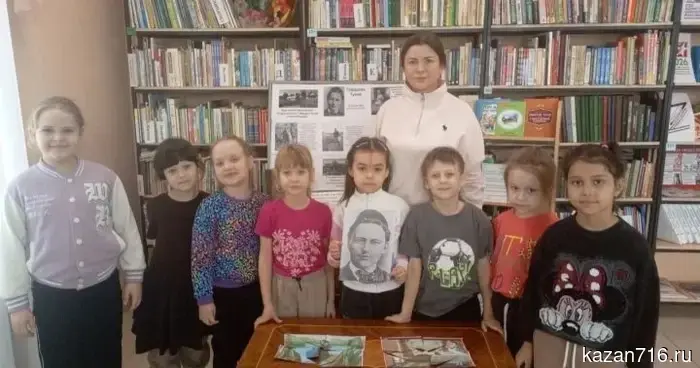 In Zainsk, preschoolers got acquainted with the works of Gabdulla Tukay.
On May 14, a literary hour dedicated to the life and work of the outstanding poet Gabdulla Tukay took place at the Ryabinka kindergarten in Zainsk.
The event was conducted by the librarian of branch No. 7, Elvira Arkhipova. 15.05.2026. Zainsk News. Republic of Tatarstan. Zainsk.
In Zainsk, preschoolers got acquainted with the works of Gabdulla Tukay.
On May 14, a literary hour dedicated to the life and work of the outstanding poet Gabdulla Tukay took place at the Ryabinka kindergarten in Zainsk.
The event was conducted by the librarian of branch No. 7, Elvira Arkhipova. 15.05.2026. Zainsk News. Republic of Tatarstan. Zainsk.
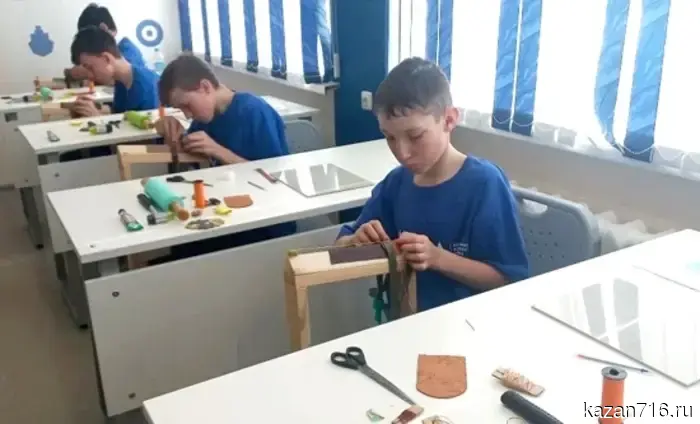 Pottery workshop, multitherapy, and "Kazan stitch"
In every rehabilitation center for children and adolescents with disabilities, under the jurisdiction of the Ministry of Labor, Employment, and Social Protection of the Republic of Tatarstan, there is a standard set of services, 15.05.2026. My newspaper. Tatarstan. Republic of Tatarstan. Kazan.
Ogorodnikov: Agrarians are massively switching to oilseed crops after the blockage of Hormuz.
Photo: IA SM-News
May 15 – IA SM.News. The reduction of sown areas of key grain crops due to the Iranian crisis is provoking a global imbalance in the food market. 15.05.2026. Kazan.Sm.News. Republic of Tatarstan. Kazan.
Pottery workshop, multitherapy, and "Kazan stitch"
In every rehabilitation center for children and adolescents with disabilities, under the jurisdiction of the Ministry of Labor, Employment, and Social Protection of the Republic of Tatarstan, there is a standard set of services, 15.05.2026. My newspaper. Tatarstan. Republic of Tatarstan. Kazan.
Ogorodnikov: Agrarians are massively switching to oilseed crops after the blockage of Hormuz.
Photo: IA SM-News
May 15 – IA SM.News. The reduction of sown areas of key grain crops due to the Iranian crisis is provoking a global imbalance in the food market. 15.05.2026. Kazan.Sm.News. Republic of Tatarstan. Kazan.
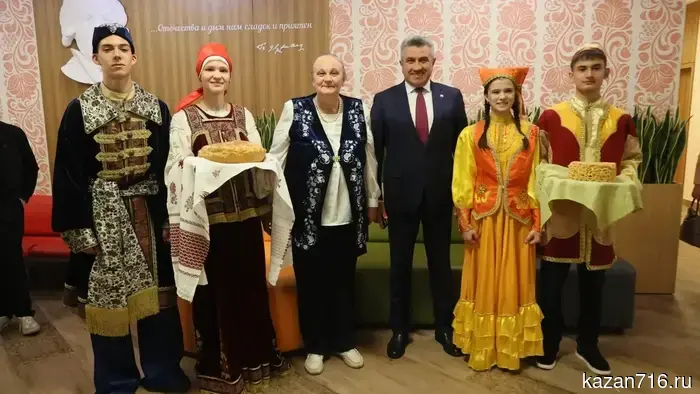 The Cyril and Methodius Youth Scientific Readings took place in Kazan.
On May 14, the XXIII Republican Cyril and Methodius Youth Scientific Readings took place at the gymnasium No. 93 in the Soviet district of Kazan, dedicated to the Day of Slavic Writing and Culture. 15.05.2026. Ministry of Education. Republic of Tatarstan. Kazan.
The Cyril and Methodius Youth Scientific Readings took place in Kazan.
On May 14, the XXIII Republican Cyril and Methodius Youth Scientific Readings took place at the gymnasium No. 93 in the Soviet district of Kazan, dedicated to the Day of Slavic Writing and Culture. 15.05.2026. Ministry of Education. Republic of Tatarstan. Kazan.
Pottery workshop, multi-therapy, and "Kazan stitch"
In every children's rehabilitation center for children and adolescents with disabilities, under the jurisdiction of the Ministry of Labor, Employment, and Social Protection of the Republic of Tatarstan, there is a standard set of services, 15.05.2026. My newspaper. Tatarstan. Republic of Tatarstan. Kazan.