
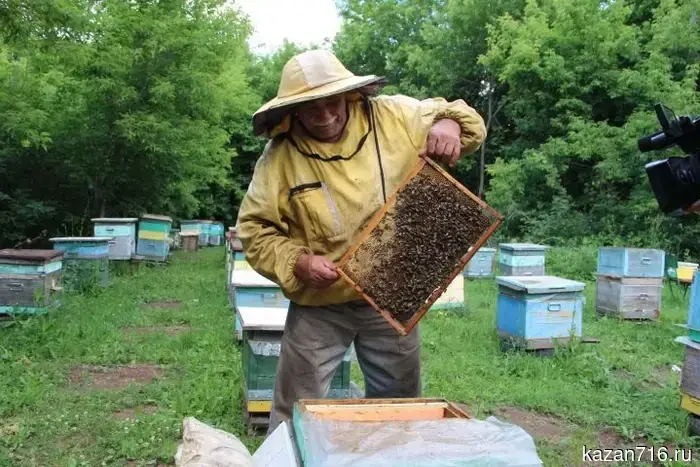
In Zainsk lives Honey Grandpa: Pyotr Mineev has dedicated 25 years to bees.
An experienced beekeeper reveals the secrets of the perfect organization of bee life
How Pyotr Mineev has been mastering the wisdom of the beehive for 25 years and brings warmth from his native land to his fellow countrymen
In the Zainsk district, among endless fields and linden groves, lies the apiary of a man whom nature has gifted with a remarkable ability – to hear the music of a bee swarm. Pyotr Ivanovich Mineev is 65 years old, and for a quarter of a century, he has not imagined his life without this noble work. For all the local residents, he is not just a beekeeper, but "Bal babai" – Honey Grandfather. His apiary is located in a picturesque spot near the village of Novy Nalim. There, where once stood the school of the now-vanished village of Nikkuchtem, today there is a steady, soothing hum. Several dozen hives stand among the diverse herbs and linden trees – the best "friends" of any beekeeper.
The path to the hive
Pyotr Ivanovich's love for bees has been passed down since childhood. His grandfather Arseniy knew a thing or two about this, often taking his grandson to the apiary, and the boy particularly enjoyed watching the honey extraction process. The first hive of his own was gifted to the future beekeeper by the renowned beekeeper Maria Belyasheva from Savalevo. "At first, I understood nothing; the life of bees was a mystery to me, but over time everything fell into place, and I found a common language with them," Mineev recalls. His uncle Kolya Kutyaev helped him learn the basics, and then there were years of independent study, reading specialized literature, and participating in conferences. He started with the Central Russian breed – strong, resilient, but with a tough temperament. "These bees meet you at the apiary from 300 meters away and see you off just the same," the beekeeper laughs. Today, his choice is the Carniolan bee: peaceful, hardworking, and very understanding, which now makes up 80 percent of his bee farm.
Lessons from the little workers
Pyotr Ivanovich admits that bees are not just a source of honey but a true university of life. He can watch their work for hours and be amazed each time. Their geolocation accuracy would make navigators envious, and they can predict the weather just as well as meteorologists, if not better. "I admire how insects can organize their processes. Everyone knows what they are doing. No one commands anyone. Some clean the house, then take care of the little ones, some clean the cradles for the bees, and some feed them. And the adult bee flies for the honey," shares Bal babai. Looking at this well-tuned mechanism, Mineev never tires of repeating: people could learn a lot from these winged creatures. Order, selflessness, and clear division of labor without orders – that is what amazes him the most. At the same time, the biology of a bee family is full of amazing paradoxes. "The development cycle of a bee is 21 days. Those born in August will live for a whole 8 months, until May of the following year," he explains. "Their main task is to survive the winter and in spring produce the first generation. The majority of worker bees live only 30–40 days. And all of them are female. The queen bee is the ruler of the hive. Males are only drones, which the family raises exclusively for summer to continue the lineage. They live from May to August, and then they are expelled from the hive. An unenviable fate," the interlocutor smiles.
A season of hopes and cares
Bees require close attention all year round. In winter, one must monitor the condition of the families; in spring, give the go-ahead for flight and honey collection; in summer, prevent swarming and properly organize honey extraction. Besides financial investments, the owner of the apiary must treat the pets for diseases, purchase equipment, and wax.
Spring at the apiary has been successful. Honey from acacia, dandelion, lungwort, and willow has already flown off to regular customers. "We collected good honey," says the owner, but there is an expectation of the main event in his voice. Now the no-honey period has begun, but ahead is the flowering of linden. "It will bloom any moment now; we are preparing, setting up the supers. We are very much looking forward to it," he admits. "For two years, we couldn't collect linden honey: either it was cold or it rained." Pyotr Ivanovich optimistically quotes the old man Almandar from a famous Tatar play: "There is rain, there is sun, there are flowers – there will be honey." And adds: "We won't be left without honey."
If somewhere bees often perish from chemical treatments of fields, in the Zainsk district, this is not a problem. "Our farmers understand that without bees, their fields won't yield. They notify us in advance when and which fields they plan to treat with pesticides," the beekeeper notes with gratitude.
A family celebration
The most responsible time – honey extraction – turns into a real celebration for the Mineev family, albeit a very exhausting one. Last year, five people worked here from morning till night for a whole week. But this family has its own touching tradition. "The eldest son pours freshly extracted, still warm honey into a mug and hands it to me: 'Dad, happy new honey harvest!' And I, according to the tradition of beekeepers, drink this mug," Pyotr Ivanovich shares warmly.
His children and grandchildren work alongside him. His son Andrey has already taken a serious interest in beekeeping, and one of his ten grandchildren reaches out to his grandfather and learns the craft from a very young age. "Even the smoke for the bees needs to be tested a lot to do it right," the older generation teaches.
For the benefit of people
Mineev's honey is known far beyond the borders of Tatarstan. Last year he harvested one and a half tons, and everything was sold out. Treats from Zainsk have traveled to Moscow, St. Petersburg, Samara, Perm, Sakhalin, and Omsk. His products are always in demand at agricultural fairs in Zainsk.
But for Pyotr Ivanovich, the main thing is not profit. He actively participates in charity: sending honey to soldiers in the SVO zone, helping volunteers, and donating his sweet products for holidays. Many locals know him not only as a beekeeper but also as the chairman of the Kriashen society and the constant host of the Peter's Day celebration.
The life of this man is an example of resilience. For ten years after the death of his wife, he lived in Kazan. Then, during the hardest period, something inexplicable happened to him: all the bees died. "When my wife passed away – all the bees died too," he says with pain. There was a break in beekeeping, but his native land called him back. Upon returning, Pyotr Ivanovich started everything anew. Now he is helped not only by his sons but also by the husband of his cousin, Salman.
Cleanliness inside and out
"Bees love cleanliness not only around but also in thoughts," Mineev is convinced. And this is his credo. He makes not only classic honey but also cream honey of eight varieties – with resin, sea buckthorn, and resin. He engages in the preparation of perga, propolis, and other gifts of the beehive. He crafts mini-hives for keeping queen bees, called nuclei, fights bee diseases, and purchases wax in Kazan. And he is always ready to help with advice those who are just starting out.
As I leave the apiary, I ask: "Can we learn something from bees?" Pyotr Ivanovich answers briefly and weightily: "To work." And explains: "Having acquired bees, from the very first day, I opened them not only as stinging and honey-producing creatures but also as hardworking insects living by communal laws. Bees are deeply independent. But if they are not helped, if they are not properly cared for – there will be neither honey nor bees."
Sometimes, when left alone at the apiary, Pyotr Ivanovich sings. He derives spiritual pleasure from it. And nearby, his bees hum – intelligent, organized, and so familiar. And it seems they are harmonizing with their Honey Grandfather.
Photo by the author
Roza Ilaltdinova
Другие Новости Казани (Казань716)
 Mendeleevsk is preparing art objects for the anniversary "Race of Heroes."
Turbine containers, a tram, a diesel locomotive, and a bus were brought to Mendeleevsk as obstacles for the upcoming "Race of Heroes," which will take place in Mendeleevsk on July 25. 28.06.2026. Chelny-Biz.Ru. Republic of Tatarstan. Naberezhnye Chelny.
Mendeleevsk is preparing art objects for the anniversary "Race of Heroes."
Turbine containers, a tram, a diesel locomotive, and a bus were brought to Mendeleevsk as obstacles for the upcoming "Race of Heroes," which will take place in Mendeleevsk on July 25. 28.06.2026. Chelny-Biz.Ru. Republic of Tatarstan. Naberezhnye Chelny.
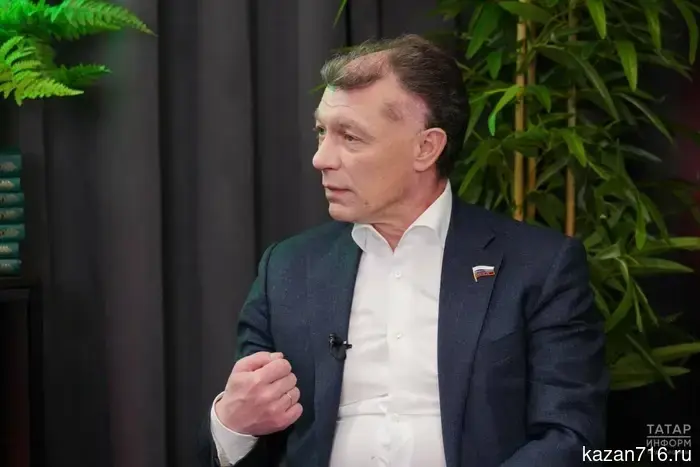 Almost 300 billion rubles in investments are expected to be attracted to the SEZ "Green Valley."
The Russian government has approved a large-scale expansion of the third special economic zone "Green Valley" in Tatarstan. 28.06.2026. IA Tatar-inform. Republic of Tatarstan. Kazan.
Almost 300 billion rubles in investments are expected to be attracted to the SEZ "Green Valley."
The Russian government has approved a large-scale expansion of the third special economic zone "Green Valley" in Tatarstan. 28.06.2026. IA Tatar-inform. Republic of Tatarstan. Kazan.
 Mendeleevsk is preparing art objects for the anniversary "Race of Heroes."
Turbine containers, a tram, a diesel locomotive, and a bus were brought to Mendeleevsk as obstacles for the upcoming "Race of Heroes," which will take place in Mendeleevsk on July 25. 28.06.2026. Chelny-Biz.Ru. Republic of Tatarstan. Naberezhnye Chelny.
Mendeleevsk is preparing art objects for the anniversary "Race of Heroes."
Turbine containers, a tram, a diesel locomotive, and a bus were brought to Mendeleevsk as obstacles for the upcoming "Race of Heroes," which will take place in Mendeleevsk on July 25. 28.06.2026. Chelny-Biz.Ru. Republic of Tatarstan. Naberezhnye Chelny.
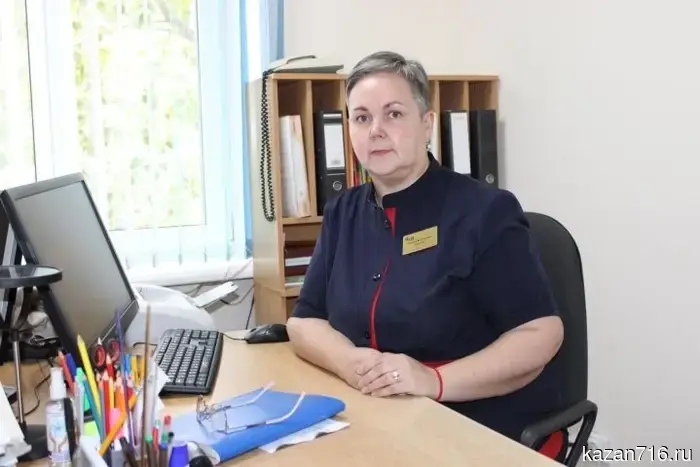 Violence between parents: how family conflicts affect children
Psychologist of GAUZ "Zainsk Central District Hospital" Helena Tsymbal: "Children learn relationships by observing adults. 28.06.2026. News of Zainsk. Republic of Tatarstan. Zainsk."
Horoscope for June 28, 2026: a day of inner light and quiet discoveries
The last Sunday of June is filled with a special, almost meditative energy. 28.06.2026. News of Zainsk. Republic of Tatarstan. Zainsk.
Violence between parents: how family conflicts affect children
Psychologist of GAUZ "Zainsk Central District Hospital" Helena Tsymbal: "Children learn relationships by observing adults. 28.06.2026. News of Zainsk. Republic of Tatarstan. Zainsk."
Horoscope for June 28, 2026: a day of inner light and quiet discoveries
The last Sunday of June is filled with a special, almost meditative energy. 28.06.2026. News of Zainsk. Republic of Tatarstan. Zainsk.
In Zainsk lives Honey Grandpa: Pyotr Mineev has dedicated 25 years to bees.
An experienced beekeeper reveals the secrets of the perfect organization of bee life How Pyotr Mineev has been mastering the wisdom of the bee hive for 25 years and sharing the warmth of his native land with his fellow countrymen In the Zainsk district, 28.06.2026. Zainsk-Inform. Republic of Tatarstan. Zainsk.