

Phishing sites: how to recognize and avoid fraud
Your awareness is the main barrier against fraudsters.
Phishing websites are fake resources created by fraudsters to steal personal data, passwords, bank details, and other confidential information. They imitate the design and functionality of official websites (banks, marketplaces, etc.), but when users visit them, they risk becoming victims of fraud. Protection against such threats is partially regulated by the Law "On Consumer Rights Protection" (No. 2300-1 dated 07.02.1992), as well as other regulations aimed at combating cybercrime.
How to recognize a phishing website:
1. Suspicious URL. Fraudsters often use domains that are similar to the originals, with slight changes: replacing letters with numbers (for example, "0" instead of "o", "l" with "1"), adding unnecessary words or symbols, or using subdomains (for example, login.bankname.ru instead of bankname.ru). You should also be cautious if the address contains strange symbols, lacks "://" after http or https, or the link looks like a string of numbers.
2. Lack of HTTPS and lock icon. Secure websites use the HTTPS protocol, which encrypts data. If there is no HTTPS in the address bar or the lock icon is crossed out, this is a warning sign.
3. Poor design and content. Obvious grammatical errors, low-quality graphics, blurry logos, or outdated images are signs of forgery. Large companies usually pay attention to the quality of content.
4. Request for personal information without reason. If a website asks for passwords, card numbers, PIN codes, or other confidential data without a valid reason (for example, during an unexpected "account recovery" or "data confirmation"), this is a sign of fraud. Legitimate companies typically do not request such information through public forms.
5. Lack of contact information. Phishing websites often lack real addresses, phone numbers, or email addresses of the company. Legal resources must provide such data.
6. Urgency and pressure. Fraudsters often use phrases like "urgent password update," "pay the fine within an hour," "your account has been hacked" to force users to act quickly without thinking.
7. Unusual formatting. If an email or message leading to the site contains errors, unusual formatting (lack of logo, changes in font or color), this is a reason to be cautious.
When you take precautions and know the legal mechanisms of protection, you not only minimize risks but also take control of the situation and reliably protect your rights. Remember: your awareness is the main barrier against fraudsters. Stay vigilant and act consciously!
Kazan Territorial Body of the State Alcohol Inspection of the Republic of Tatarstan
*Photo created with the help of AI

Другие Новости Казани (Казань716)
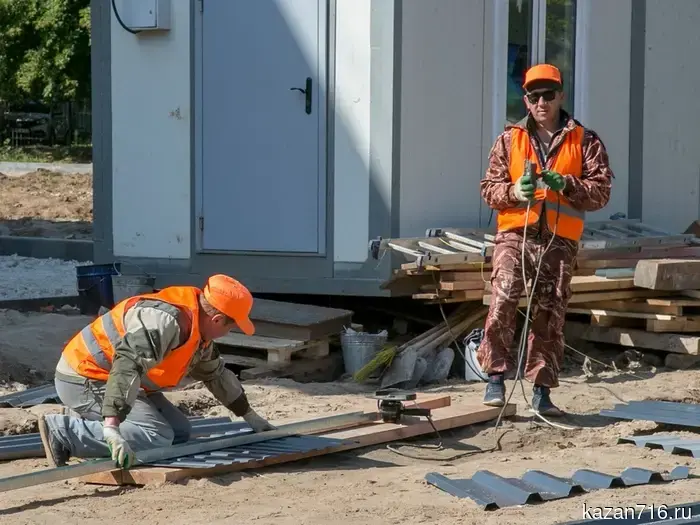 In Kazan, 41 participants of the SVO have been employed since the beginning of the year.
They are mastering the professions of welder, CNC machine operator, and tractor driver, among others.
Since the beginning of 2026, 70 participants of the special military operation have contacted the employment centers in Kazan regarding employment. 06.07.2026. Administration of Kazan. Republic of Tatarstan. Kazan.
In Kazan, 41 participants of the SVO have been employed since the beginning of the year.
They are mastering the professions of welder, CNC machine operator, and tractor driver, among others.
Since the beginning of 2026, 70 participants of the special military operation have contacted the employment centers in Kazan regarding employment. 06.07.2026. Administration of Kazan. Republic of Tatarstan. Kazan.
 Since the beginning of the year, Kazan has been visited by 3 million tourists.
This is 6% higher than the figures for the same period in 2025.
Photo: Denis Gordiyko
In the first half of 2026, Kazan was visited by about 3 million guests, which is 6% more than the figures for the same period in 2025. 06.07.2026. Administration of Kazan. Republic of Tatarstan. Kazan.
A quarantine for rabies has been introduced in the Moscow district of Kazan.
In the Moscow district of Kazan, on Sh. Usmanov Street, a quarantine for rabies has been introduced. 06.07.2026. IA Tatar-inform. Republic of Tatarstan. Kazan.
Since the beginning of the year, Kazan has been visited by 3 million tourists.
This is 6% higher than the figures for the same period in 2025.
Photo: Denis Gordiyko
In the first half of 2026, Kazan was visited by about 3 million guests, which is 6% more than the figures for the same period in 2025. 06.07.2026. Administration of Kazan. Republic of Tatarstan. Kazan.
A quarantine for rabies has been introduced in the Moscow district of Kazan.
In the Moscow district of Kazan, on Sh. Usmanov Street, a quarantine for rabies has been introduced. 06.07.2026. IA Tatar-inform. Republic of Tatarstan. Kazan.
Phishing sites: how to recognize and avoid fraud
Your awareness is the main barrier against fraudsters Phishing sites are fake resources created by scammers to steal personal data, passwords, bank details, and other confidential information. 06.07.2026. Newspaper New Life. Republic of Tatarstan. Bulgaria.