
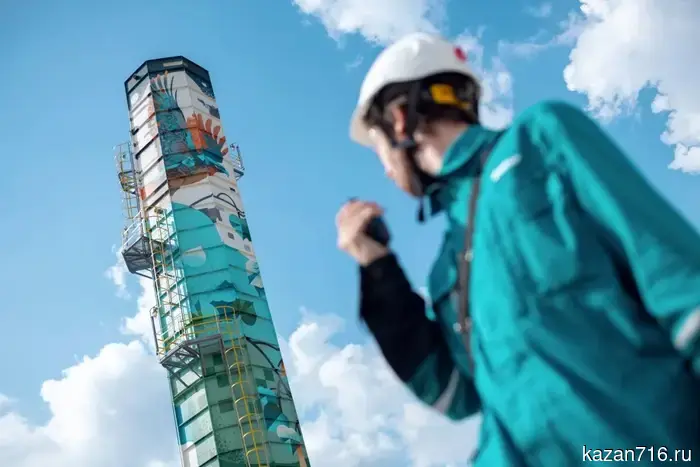
"Kazanorgsintez" continues to invest in development despite market challenges: production growth and the launch of its own generation.
"Kazanorgsintez" increased production by 6% in the first quarter of 2026
Price swings: how geopolitics hit revenues
The first quarter of 2026 brought mixed results for Russia's petrochemical industry. Natural indicators show steady growth, while financial reports reflect adjustments in figures. The company's revenue decreased to 24.1 billion rubles, while net profit amounted to 722 million rubles. At the same time, the production of commercial products increased by 6% to 295 thousand tons. The main reason for such a sharp discrepancy between physical production volumes and financial results lies in the dramatic dynamics of global polymer prices. However, a new driver of price volatility emerged at the beginning of 2026. The escalation of the geopolitical situation in the Middle East and the closure of the Strait of Hormuz on February 28 led to a rapid increase in oil product prices. Oil prices exceeded $110, rising more than 50% from February levels, while naphtha almost doubled in price at times, increasing by more than 50% compared to February. At the same time, polymer prices did not keep pace with the rise in raw materials. For instance, prices in Asia rose only by 29%, and even in Turkey, which suffered the most without its own production and was left without supplies from the main markets in the Middle East and Iran, prices increased only by 40%, failing to match the pace of oil price growth. Sibur had to respond to the rising raw material costs but raised prices with noticeable caution. In an interview, board member and CEO Pavel Lyakhovich noted: "We understand that the market cannot bear such growth. Therefore, our price movements are small. The weighted average price at the end of March was 5% higher than in January, and in April it was 10-12% higher."
Own energy: what the launch of the gas turbine unit will give "Kazanorgsintez"
Despite the unfavorable market conditions, the company continues to implement strategic projects. The central event of the first quarter of 2026 for Kazanorgsintez occurred after its conclusion, so its effect has not yet been fully reflected in the reports. In mid-May 2026, with the participation of Sibur's chairman Mikhail Karisalov, Tatarstan's president Rustam Minnikhanov, and the Russian Minister of Energy Sergey Tsivilev, the Lushnikov gas turbine unit (GTU) was ceremonially launched. This facility is critically important: it will allow the enterprise to fully cover its own electricity needs, significantly reduce its environmental impact, and, importantly, partially hedge against the risks of rising energy resource costs in the future. How will this affect finances? Firstly, savings on electricity. Tatarstan is an energy-deficient region where, according to experts, the wear and tear of generating capacities reaches critical levels, and there is a shortage of about 5-7 billion kWh of generation per year. Purchasing electricity from the grid is an expensive endeavor for energy-intensive petrochemical production. Own generation radically reduces this cost item. Secondly, the unit operates on synthetic gas—a byproduct of ethylene production that was previously simply burned off. Thirdly, the environmental effect. By using a secondary energy resource, carbon dioxide emissions will decrease by 3%, and the overall energy efficiency of the enterprise will increase by 15%. The peak of the company's investment program occurred in 2025. In 2026, the company continues to implement ongoing projects, although the volume of capital expenditures is naturally decreasing. In the first three months, 5.7 billion rubles were allocated, confirming that management did not choose the path of total contraction. Sibur adheres to a long-term strategy, within which a decrease in profitability and an increase in production costs are a momentary issue, argues Igor Yushkov, leading analyst at the National Energy Security Fund and expert at the Financial University under the Government of the Russian Federation. "The entire business today suffers from high rates and fluctuations in raw material and product prices, but this will not force Sibur to abandon its strategy or change investment decisions," Yushkov noted. "All projects announced by the company are being implemented with a view to decades ahead, and in the future, they will increase production profitability."
Capital grows, debt burden remains under control
The company maintains its reserves and shows slight growth in its equity (which increased to 111.8 billion rubles over the quarter) and retained earnings (which amounted to 110 billion rubles at the end of the first quarter of 2026). In the current environment, this is already an achievement. The debt burden, although it has increased, remains within manageable limits: the ratio of borrowed funds to equity is approximately 0.35 (about 39 billion in debt against nearly 112 billion in equity)—a safe level that does not create a risk of losing financial stability.
What to expect next?
Looking at "Kazanorgsintez" through the lens of industry problems (declining demand for petrochemicals, high rates, rising costs), the picture appears cautious but not catastrophic. The enterprise maintains profitability, increases capital, modernizes production, and does not experience a debt crisis. This is an example of how a large Russian plant can navigate a challenging macroeconomic period without losing financial stability.
Key factors that the market will monitor over the year and that will positively impact the company's reporting:
The speed of the GTU reaching full capacity and the real economic effect of reducing electricity costs.
The dynamics of domestic polyethylene prices (signs of improvement appeared in the first quarter of 2026, but the sustainability of the trend is in question).
The key dilemma for the enterprise is to maintain a balance between investments in development and servicing debt while simultaneously adapting to the volatile price environment dictated from outside. Successfully navigating this stage, combined with maximum flexibility from the company's management in the short term, will allow "Kazanorgsintez" not only to restore pre-crisis levels of profitability but also to strengthen its position as one of the most efficient petrochemical assets in the country.
More news about the event:
"Kazanorgsintez" will direct 70% of net profit to dividend payments
The company will allocate 5.1 billion rubles, or 70% of net profit, for dividend payments to shareholders of "Kazanorgsintez" for 2025. 13:16 18.06.2026 IA Tatar-inform - Kazan
KOS will allocate 5 billion for dividends amid an 8.5-fold drop in profit in the first quarter of 2026
The Board of Directors of PJSC "Kazanorgsintez" will allocate about 5.1 billion rubles for dividend payments based on the results of 2025. 13:13 18.06.2026 Business Online - Kazan
Investment in "Kazanorgsintez" nearly doubled last year
Investment in "Kazanorgsintez" increased by 86% or 19 billion rubles to 41.1 billion in 2025. 12:16 18.06.2026 IA Tatar-inform - Kazan
The consolidated budget of Tatarstan received ₽19.3 billion in excise taxes from January to May 2026
This is 35.1% of the annual plan.
From January to May 2026, the consolidated budget of Tatarstan received 19.3 billion rubles in excise taxes. 11:49 18.06.2026 TatCenter.ru - Kazan
Tatarstan ranked second in Russia in the volume of IT mortgages issued at the beginning of 2026
Tatarstan has become one of the leading regions in the volume of IT mortgages issued since the beginning of 2026. 10:54 18.06.2026 GTRK Tatarstan - Kazan
"Kazanorgsintez" continues to invest in development despite market challenges: production growth and the launch of its own generation
"Kazanorgsintez" increased production by 6% in the first quarter of 2026
Price swings: 10:16 18.06.2026 IA Tatar-inform - Kazan
"Kazanorgsintez" profit fell by 88% in the first quarter of 2026
Dilyara Aminova Weekend editor
Net profit of PJSC "Kazanorgsintez" (a subsidiary of Sibur) amounted to 722 million rubles at the end of the first quarter of 2026. 08:55 18.06.2026 ProKazan.Ru - Kazan
Black days of synthesis: Kazan's Sibur subsidiary lost 88% of its profit
"Kazanorgsintez" let off steam, but shareholders are unlikely to feel the warmth
Shareholders of "Kazanorgsintez" (KOS) can forget about the generous dividends they were accustomed to in 2023-2024. 08:43 18.06.2026 Business Online - Kazan
News from neighboring regions on the topic:
Krasnodar Krai ranked among the top three regions with the largest budget deficit
The Audit Chamber recorded a deficit of 19.9 billion rubles for Krasnodar Krai in the first quarter of 2026
On June 16, the Audit Chamber of the Russian Federation published a report on the execution of budgets of subjects for the first quarter of 2026. 12:14 17.06.2026 Yuga.Ru - Krasnodar
How much tax is paid in the Oryol region
Другие Новости Казани (Казань716)
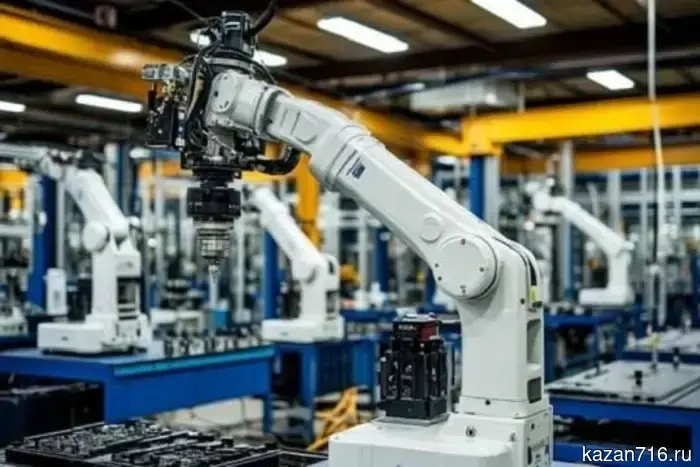 By 2030, Tatarstan plans to increase its fleet of robots.
In the Republic of Tatarstan, by the end of the current decade, it is planned to significantly increase the level of automation in production, raising the number of operational industrial robots by approximately four times compared to current figures.
By 2030, Tatarstan plans to increase its fleet of robots.
In the Republic of Tatarstan, by the end of the current decade, it is planned to significantly increase the level of automation in production, raising the number of operational industrial robots by approximately four times compared to current figures.
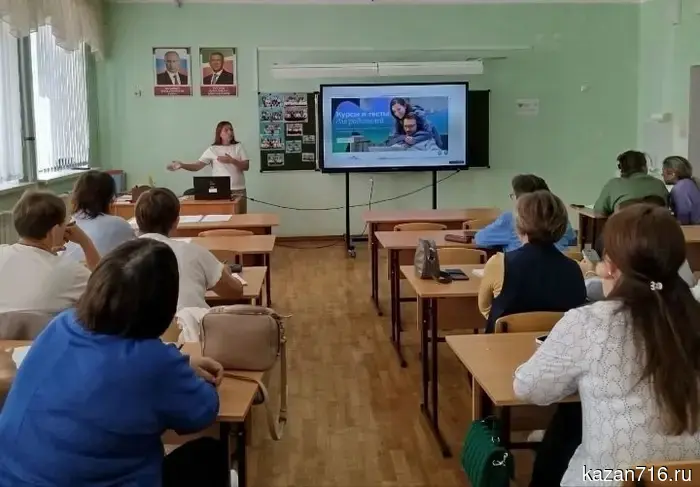 More than 1200 schools in Tatarstan have become participants in the "Ticket to the Future" project.
The Republican program for early career guidance, which started in 2021, has proven to be highly effective during its operation. 18.06.2026. Newspaper New Life. Republic of Tatarstan. Bolgar.
The rules for family mortgages will be adjusted starting July 1 to increase birth rates.
For families with multiple children, the rate can be reduced to below 6%.
Starting from July 1, 2026, changes to the conditions of the family mortgage program will come into effect in Russia. 06/18/2026. Agryz News. Republic of Tatarstan. Agryz.
In Tatarstan, traditional costumes of the peoples of the Volga region from the 19th to 20th centuries have been recreated.
In the republic, a large-scale historical and ethnographic project "Traditional Costume of the Peoples of the Kazan Volga Region in the Second Half of the 19th – First Half of the 20th Century" has been completed, implemented with the support of the President of Tatarstan Rustam Minnikhanov. 18.06.2026. Kazan Vedomosti. Republic of Tatarstan. Kazan.
More than 1200 schools in Tatarstan have become participants in the "Ticket to the Future" project.
The Republican program for early career guidance, which started in 2021, has proven to be highly effective during its operation. 18.06.2026. Newspaper New Life. Republic of Tatarstan. Bolgar.
The rules for family mortgages will be adjusted starting July 1 to increase birth rates.
For families with multiple children, the rate can be reduced to below 6%.
Starting from July 1, 2026, changes to the conditions of the family mortgage program will come into effect in Russia. 06/18/2026. Agryz News. Republic of Tatarstan. Agryz.
In Tatarstan, traditional costumes of the peoples of the Volga region from the 19th to 20th centuries have been recreated.
In the republic, a large-scale historical and ethnographic project "Traditional Costume of the Peoples of the Kazan Volga Region in the Second Half of the 19th – First Half of the 20th Century" has been completed, implemented with the support of the President of Tatarstan Rustam Minnikhanov. 18.06.2026. Kazan Vedomosti. Republic of Tatarstan. Kazan.
 Pregnant wives of conscripts in Tatarstan will receive 45,000 rubles: how to apply for the payment
The allowance is granted to women with a pregnancy term of 180 days and is retained even in the event of the husband's death. 18.06.2026. Newspaper New Life. Republic of Tatarstan. Bolgar.
The traditional road safety competition "YID-DOZOR" took place in Almetyevsk.
The annual "YUID-DOZOR" competition was held at the Children's and Youth Creativity Center of Almetyevsk, bringing together participants from the city's school camps. 06/18/2026. Almetyevsky District. Republic of Tatarstan. Almetyevsk.
Pregnant wives of conscripts in Tatarstan will receive 45,000 rubles: how to apply for the payment
The allowance is granted to women with a pregnancy term of 180 days and is retained even in the event of the husband's death. 18.06.2026. Newspaper New Life. Republic of Tatarstan. Bolgar.
The traditional road safety competition "YID-DOZOR" took place in Almetyevsk.
The annual "YUID-DOZOR" competition was held at the Children's and Youth Creativity Center of Almetyevsk, bringing together participants from the city's school camps. 06/18/2026. Almetyevsky District. Republic of Tatarstan. Almetyevsk.
"Kazanorgsintez" continues to invest in development despite market challenges: production growth and the launch of its own generation.
"Kazanorgsintez" increased production by 6% in the first quarter of 2026 Price swings: 06.18.2026. IA Tatar-inform. Republic of Tatarstan. Kazan.