

Psychosomatics of excess weight in women: why does the body not lose weight even on a diet?
Psychosomatics of obesity in women is not a myth, but a complex protective mechanism of the psyche.
In society, the axiom has firmly taken root: to lose weight, you need to eat less and move more. However, millions of women, diligently counting calories and spending time in gyms, face the paradox — their weight remains the same or returns with a "bonus." Medicine and psychology are increasingly concluding that the basis of persistent obesity lies not only in hormones or genes but also in deep psychosomatic mechanisms. The body is not less intelligent than our mind, and if it accumulates fat, there is a significant internal reason for this.
Physiology vs Psychology: who is to blame for weight gain?
Before discussing emotional traumas, it is important to acknowledge that obesity is a multifactorial condition. Research confirms that triggering factors can include:
- Systemic errors in the diet (excess simple carbohydrates and trans fats);
- Chronic sleep deprivation disrupting the production of leptin and ghrelin;
- Side effects of pharmacotherapy (hormonal drugs, some antidepressants);
- Genetic predisposition to slow metabolism;
- Endocrine pathologies (hypothyroidism, insulin resistance);
- Organic lesions of the central nervous system.
However, these factors explain only part of the cases. The rest falls into the realm of psychosomatics, where mechanisms come into play that are beyond strict calculations of caloric intake and expenditure.
Female physiology: hormonal swings and weight gain
A woman's body is a complex system, sensitive to cyclical changes. Psychosomatic triggers often overlap with physiological adjustments, creating an explosive mixture.
- Premenstrual syndrome (PMS). A few days before menstruation, many women notice swelling and an increase in weight by 1-2 kg. This is physiological fluid retention, but if a woman experiences significant stress before her cycle, the body may "fix" this result as a protective reaction to hormonal turmoil.
- Pregnancy and postpartum period. This is a time when the psyche is most vulnerable. The fear of losing attractiveness or, conversely, the desire to dissolve into the child leads to fat tissue becoming both "armor" and "nest." Weight gain during pregnancy is often a subconscious attempt to create the safest environment for the fetus, even if the diet remains modest.
- Climacteric period. A decrease in estrogen alters lipid metabolism. Fat begins to accumulate in the abdominal area. On a psychosomatic level, this is often associated with a loss of female identity, fear of aging, and a sense of uselessness. The body tries to compensate for the loss of "female" function by accumulating resources that, according to the subconscious, will protect against the cold of the outside world.
Psychosomatic root causes: why the body chooses fat
Psychosomatics views excess weight not as a sentence but as a symptom. Fat tissue is not just a collection of adipocytes; it is a complex endocrine organ that responds sensitively to emotional background. Let’s consider the key psychological "hooks" that trap the female body.
1. Protective shell from the world
For many women, fullness is a way to become larger to feel safe. If a woman has experienced violence, betrayal, or harsh criticism in childhood or adulthood, the subconscious activates the program: "The bigger I am, the harder it is to hurt me." Fat becomes a physical wall between a sensitive soul and an aggressive reality.
2. Suppressed aggression and anger
In society, women are often forbidden to be angry. It is "ugly," "unfeminine." Unexpressed anger, which has not found an outlet in words or actions, turns into muscle tension. To quell these spasms, the body produces cortisol, which directly contributes to the accumulation of visceral fat. Thus, resentment towards a husband or boss materializes as rolls of fat around the waist.
3. Guilt and low self-esteem
The motto "I have no right to take up much space in this world" is a direct path to weight gain. A woman who does not feel her worth often tries to become visually smaller, but the paradox is that the subconscious, trying to prove the opposite (that she exists), begins to grow wider. This is a kind of cry of the soul: "Look at me, I exist!"
4. Unprocessed grief (fat as a "lifebuoy")
Many women eat away their grief over the loss of loved ones or painful separations. In psychosomatics, this is called "conserving pain." Fat fills the void that formed in the soul after a loss. The tissue grows, filling the emotional vacuum so that the woman does not feel "empty" inside.
5. Resistance to change
If a woman fears success or fears that losing weight will radically change her life (she will have to change jobs, relationships, surroundings), the body begins to "sabotage" the diet. Hence the breakdowns and irresistible cravings for sweets. Weight becomes an anchor that keeps her in the comfort zone.
The language of the body: how to decode signals
Our body speaks to us constantly. We are used to listening only to our heads, ignoring bodily sensations. If you feel:
- Unexplained anxiety that turns into a desire to snack;
- Chronic insomnia against the backdrop of a strict diet;
- Irritation when looking at your reflection but a lack of will to change anything;
— these are SOS signals. This means that the conflict is unresolved. Psychosomatics asserts: as long as you do not reconcile with your emotions, any diet will be an act of violence, to which the body will respond with even more weight gain.
Strategy for shedding weight: how to lose weight through mindfulness
The path to a slim body lies through reconciliation with oneself. The uniqueness of the approach lies in the fact that we first change our thinking, and the body adjusts to it.
- Allow yourself to be angry and sad. Find a safe way to express emotions (sports, creativity, writing practices). When negativity flows out through words, the need for a protective layer of fat decreases.
- Work with your inner child. Often the cause of obesity lies in childhood beliefs ("If you eat poorly, you won't grow up"). Rewrite these scripts. Tell yourself: "I am an adult, I can choose what to eat, and I am safe."
- Body practices instead of fasting. Start with breathing exercises and yoga. This lowers cortisol levels. As soon as stress dissipates, the body stops panic-storing energy.
- Mindful eating as meditation. Eat while feeling every bite. Ask yourself: "Am I hungry or do I want to calm down?" Separate stomach hunger from soul hunger.
- Accept your current body. This sounds paradoxical, but stop fighting with yourself. Gratitude to the body for enduring your emotional burdens is the first step towards it starting to shed the excess.
Psychosomatics of excess weight in women is not a sentence but a key to unraveling your unique story. Extra pounds are not enemies but messengers that have come to tell you: "We are tired of being a shield, help us become free."
If you have tried all diets and returned to square one, stop. Start not with the refrigerator but with a journal. Look for answers to the questions: "What do I want to say with this weight?", "Whom have I not forgiven?", "What am I really afraid of?". Once the psychological conflict is resolved, your metabolism will begin to return to normal on its own. Slimness is not just about food; it is about harmony within you. And this harmony is accessible to every woman who is ready to listen to her inner voice.
Photo by the author
Yulia Kazamarova
More news about the event:
Psychosomatics of excess weight in women: why the body does not lose weight even on a diet?
Psychosomatics of obesity in women is not a myth, but a complex protective mechanism of the psyche. In society, the axiom has firmly taken root: to lose weight, you need to eat less and move more. 13:37 18.06.2026 Zainsk-inform - Zainsk
Psychosomatics of excess weight in women: why the body does not lose weight even on a diet?
Psychosomatics of obesity in women is not a myth, but a complex protective mechanism of the psyche. In society, the axiom has firmly taken root: to lose weight, you need to eat less and move more. 13:22 18.06.2026 News of Zainsk - Zainsk

Другие Новости Казани (Казань716)
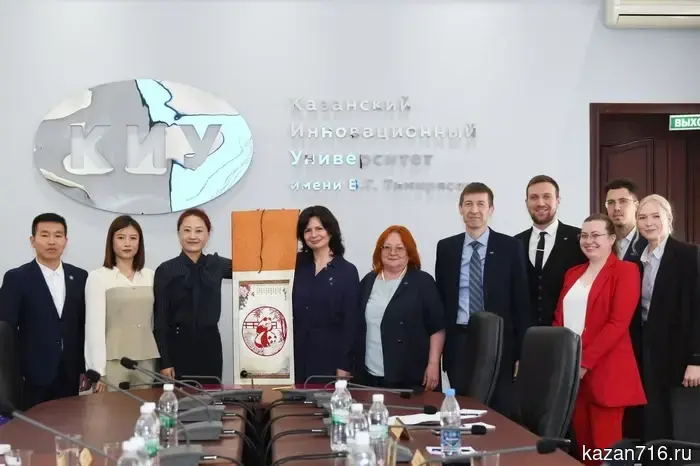 The V. G. Timiryasov Institute of Management strengthens international ties with the People's Republic of China.
Kazan Innovative University named after V.G. Timiryasov received a delegation from Heilongjiang University of Finance and Economics (June 18, 2026. KIU. Republic of Tatarstan. Kazan.
The rules for family mortgages will be adjusted starting July 1 to increase birth rates.
For families with multiple children, the rate can be reduced to below 6%.
Starting from July 1, 2026, changes to the conditions of the family mortgage program will come into effect in Russia. 06/18/2026. Agryz News. Republic of Tatarstan. Agryz.
New rules for flight delays: what has changed since March 1, 2026
With the start of the long-awaited vacation season, thousands of travelers are heading towards adventures, dreaming of gentle seas and warm sand. 06/18/2026. Mamadysh District. Republic of Tatarstan. Mamadysh.
The V. G. Timiryasov Institute of Management strengthens international ties with the People's Republic of China.
Kazan Innovative University named after V.G. Timiryasov received a delegation from Heilongjiang University of Finance and Economics (June 18, 2026. KIU. Republic of Tatarstan. Kazan.
The rules for family mortgages will be adjusted starting July 1 to increase birth rates.
For families with multiple children, the rate can be reduced to below 6%.
Starting from July 1, 2026, changes to the conditions of the family mortgage program will come into effect in Russia. 06/18/2026. Agryz News. Republic of Tatarstan. Agryz.
New rules for flight delays: what has changed since March 1, 2026
With the start of the long-awaited vacation season, thousands of travelers are heading towards adventures, dreaming of gentle seas and warm sand. 06/18/2026. Mamadysh District. Republic of Tatarstan. Mamadysh.
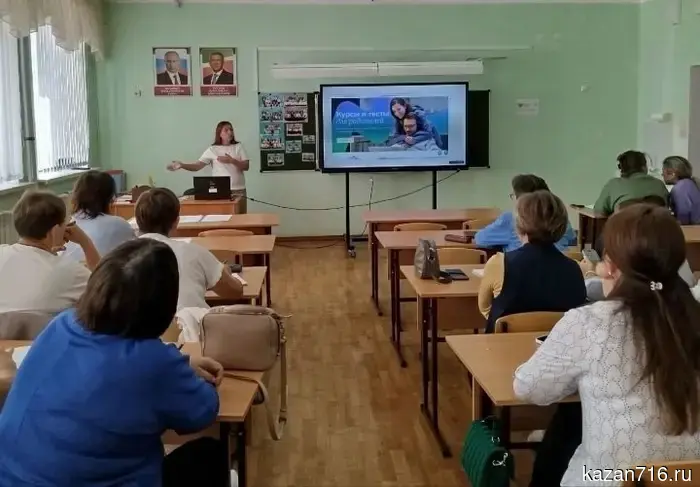 More than 1200 schools in Tatarstan have become participants in the "Ticket to the Future" project.
The Republican early career guidance program, launched in 2021, has proven to be highly effective during its operation. 18.06.2026. Newspaper New Life. Republic of Tatarstan. Bolgar.
The traditional road safety competition "YID-DOZOR" took place in Almetyevsk.
The annual "YUID-DOZOR" competition was held at the Children's and Youth Creativity Center of Almetyevsk, bringing together participants from the city's school camps. 06/18/2026. Almetyevsky District. Republic of Tatarstan. Almetyevsk.
More than 1200 schools in Tatarstan have become participants in the "Ticket to the Future" project.
The Republican early career guidance program, launched in 2021, has proven to be highly effective during its operation. 18.06.2026. Newspaper New Life. Republic of Tatarstan. Bolgar.
The traditional road safety competition "YID-DOZOR" took place in Almetyevsk.
The annual "YUID-DOZOR" competition was held at the Children's and Youth Creativity Center of Almetyevsk, bringing together participants from the city's school camps. 06/18/2026. Almetyevsky District. Republic of Tatarstan. Almetyevsk.
Psychosomatics of excess weight in women: why does the body not lose weight even on a diet?
The psychosomatics of obesity in women is not a myth, but a complex protective mechanism of the psyche. In society, the axiom has firmly taken root: to lose weight, one must eat less and move more. 06/18/2026. News of Zainsk. Republic of Tatarstan. Zainsk.